
Why AI Trip Planners Are Changing the Way Americans Travel in 2026
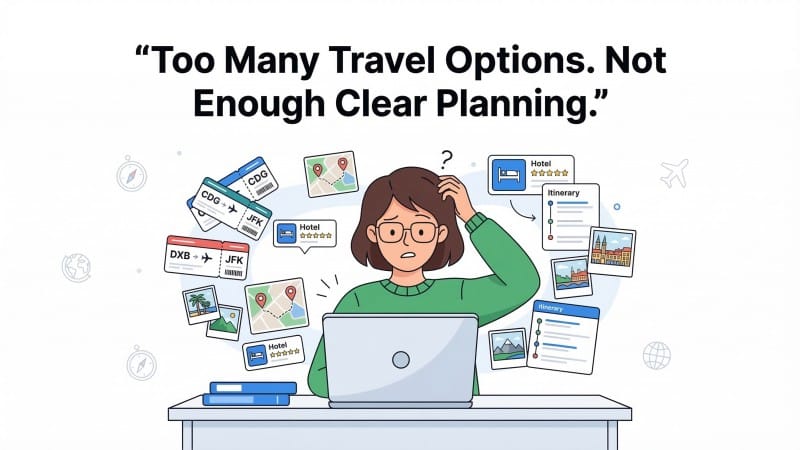
Travel planning in the United Sates is undergoing a paradigm shift. American tourists in 2026 want more than generic itineraries, sluggish travel agency response times, and never-ending browser tabs. They demand instantaneous speed, relevance, and personalisation. Due to this shift in consumer behaviour, travel agencies are being pushed to implement AI trip planners at scale as a central part of their work.
For travel agencies, tour operators, and travel companies targeting the US market, AI is no longer an experimental add-on. It is quickly evolving as a fundamental operational capability that is revolutionising the planning, selling, and enjoyment of travel.
Direct Answer: Why Are AI Trip Planners Transforming Travel in the US
By providing highly customised itineraries in minutes rather than days, AI trip planners are revolutionising American travel in 2026. AI can generate precise, preference-driven travel plans with over 95% accuracy with a single prompt, assisting travel agencies in meeting the growing customer expectations, increasing conversion rates, and scaling personalised experiences, without raising operational costs.
The New American Traveller: What Changed
Over the past few years, American travel habits have evolved drastically. Travellers of today prioritise:
· Tailored experiences as opposed to generic packages
· Quicker planning and immediate recommendations
· Flexible, interest-based itineraries
· Seamless digital-first interactions
Whether someone is travelling solo, working remotely, or managing a family trip, Americans now expect experiences to reflect their lifestyle, not just a template. This shift has made manual itinerary planning dated, ineffective, and challenging to scale.

What is AI Trip Planner
An intelligent system that uses artificial intelligence to automatically generate end-to-end travel itineraries is called an Best AI trip planner. It handles inputs from travellers like:
· Destination and duration of the stay
· Preferences for budget
· Group size and travel pace
· Travel interests and style
Based on these, it curates structured, day-wise plans, ready to be shared with the client or refine further. For B2B travel companies, this is a breakthrough. AI handles the tough backend work engine, cutting down on the planning time significantly with enhanced accuracy, in ways that were not possible earlier.
Why AI Trip Planning is Booming in the US?
Need for instant personalisation
The American consumers expect real-time personalisation across industries, from music to e-commerce to streaming platforms, and travel is no exception.
With AI, the trip planners can:
· Deliver customised plans instantly
· Cut down on back-and-forth edits
· Increase acceptance rates of proposals
This instant personalisation provision creates a significant competitive advantage.
Speed is now a revenue driver
In 2026, speed directly impacts the sale conversion. Get a tailored plan to a customer fast and the likelihood of closing the sale is higher.
AI enables to:
· Build itineraries in minutes
· Respond to leads immediately
· Higher enquiry-to-booking conversion rates
Manual planning cannot match this pace at scale.
How AI Trip Planners Achieve Accuracy and Consistency
Accuracy has been one of the biggest concerns of AI trip planning. To address this, contemporary AI platforms have combined:
· Extensive destination-specific data
· Efficient route mapping
· Time and distance optimisation
· Insights from historical itinerary trends
Consequently, AI trip planners now achieve over 95% itinerary accuracy, significantly reducing errors and rework and a smoother experience for everybody.
For travel businesses, this consistency builds brand trust and improves operational efficiency.
AI Trip Planners vs Traditional Trip Planning
Traditional planning challenges:
· High dependency on individual planner expertise
· Inconsistency in quality
· Time-consuming manual research
· Limited scalability
AI trip planning advantages:
· Significantly reduced planning time
· Consistent, high-quality itineraries
· Personalisation at scale
· Easier expansion to new destinations
The most impactful approach is that which integrates AI for efficiency and scale with human expertise for final refinement.
Business Benefits for Travel Companies Targeting American Travellers
Higher Customer Satisfaction
AI-powered itineraries reflect what the travellers’ interests are. This results in:
· Strong first impressions
· Expectation alignment from the very beginning
· Fewer modifications
Greater Team Productivity
With AI, automating research and structure allows:
· Shift of team focus on relationship building than on time-consuming research
· Handling of higher enquiries and volumes
· Reduced burnout and training time for staff
Sustainable Growth without Linear costs
AI trip planners allow travel businesses to expand in the US market, without proportionally increasing manpower, making the growth sustainable, and achievable.
SEO Advantage: Why AI Trip Planning Content Matters?
Travel companies that leverage AI also benefit from improved digital visibility. AI-powered trip suggestions and content support:
· Long-tail precise keyword targeting
· Creation of customised landing pages for every traveller type
· Faster content creation for countless destinations
All this strengthens their organic visibility in the competitive US travel landscape.
E-E-A-T and Trust in AI Trip Planning for American Travellers
For American planning trips in 2026, trust us built on accuracy, clarity, and reliability. AI trip panners enhance E-E-A-T by reflecting how US travellers plan, evaluate, and book their vacations today.
Experience: Designed for the American Traveller
· AI understand the American travel trends such as road trips, flexible pacing, and multi-city trips
· Provides the right blend of adventure and downtime to avoid hectic and packed schedules
· Key expectations of American travellers like comfort, convenience, and value are always prioritised
Expertise: Data-powered planning
· AI planners use real data such as seasonality, destination-specific, efficient ravel routes, instead of assumptions, for planning
· Multi-city and long-haul itineraries are practical and well-organised
· Minimise manual errors in traditional trop planning
Authority: Reliable and consistent at scale
· Polished, uniform, and professional itinerary formats
· Maintains consistent quality across destinations and planners
· Strengthens brand credibility for US-focused travel companies
Trust: AI Speed with Human Insights
· AI quickly builds the itinerary framework
· Local knowledge and cultural insights are refined by the travel experts
· Transparent personalisation provide reassurance to tech-savvy American customers.
Why this matters in the US Market
· American travellers are time-sensitive, and weigh their options
· Faster, accurate, and highly personalised itineraries instil confidence and conversions
· AI enables trust-driven personalisation at scale without compromising quality
Final Thoughts: The Future if American Travel Planning
AI trip planners are revolutionizing the way Americans embark on their journeys in 2026. Once a labour-intensive, lengthy manual process has transformed into a quick, customised, and scalable experience.
For travel agencies and tour operators aiming at the US consumer market, embracing AI trip planning has transitioned from optional to imperative in order to remain competitive.
The future of travel is driven by companies that can deliver accurate personalisation rapidly, and AI is the driving force behind this capability.
